
Managing traction on wet clay and loose gravel is critical because poor grip can quickly lead to accidents, stuck vehicles, and costly delays. On busy job sites, even a small loss of traction can put drivers, workers, and equipment at risk. That is why construction site traction control is a key part of overall safety planning.
Rain and moisture make wet clay soil smooth and slippery, while loose gravel surfaces shift under heavy loads. As a result, heavy construction vehicles can skid, slide, or lose control. When traction fails, work slows down, downtime increases, and safety risks rise across the entire site.
Why Are Wet Clay and Loose Gravel So Dangerous for Vehicles?
Wet clay and loose gravel behave very differently from dry ground. The friction coefficient of wet clay is very low, which means tires cannot grip the surface well. When rain causes soil moisture saturation, clay turns sticky and slick at the same time.
Because of the rainfall impact on clay soil, vehicles slide even at low speed. Loose gravel adds another risk because stones move under weight. This reduces surface shear strength, making trucks unstable. Together, these surfaces increase skidding, slow braking, and raise the chance of rollovers.
What Site Engineering Controls Improve Traction on Construction Sites?
Strong ground stabilization methods help reduce traction problems before vehicles even enter the site. One common method is lime stabilization, where lime or cement is mixed into clay to reduce moisture and improve strength.
Adding a crushed stone base layer creates a firm running surface for trucks. Geotextiles placed between clay and gravel stop mixing and keep roads stable longer.
Good construction site drainage systems are also vital. Drainage ditches and culverts move water away from roads and prevent soft spots.
In high-risk zones, temporary access roads and heavy-duty mats spread vehicle weight and limit mud buildup. Together, these controls form a strong base for safe movement.
How Does Haul Road Design and Maintenance Reduce Skidding?
Smart road design plays a big role in haul road safety. Crowned road design allows water to drain off instead of pooling on the surface. Gentle slopes and controlled grades help trucks brake safely, especially downhill.
Regular haul road maintenance, such as grading and filling ruts, keeps the surface smooth and firm. Inspections help spot weak areas early. By fixing problems fast, sites focus on preventing skidding on construction haul roads and avoid sudden traction loss during wet conditions.
How Should Vehicles Be Prepared for Wet Clay and Gravel Conditions?
Vehicle setup matters as much as the road. The best tires for wet clay construction sites are mud-terrain tires, not all-terrain ones. Their deep, self-cleaning tire treads push mud out and improve grip.
Drivers may also adjust tire inflation pressure slightly lower to increase contact with the ground. Four-wheel drive and differential locks help spread power evenly. Proper load distribution for trucks is also important. Balanced loads reduce sliding, tipping, and sudden loss of control.
Which Traction Aids and Recovery Solutions Work Best on Site?
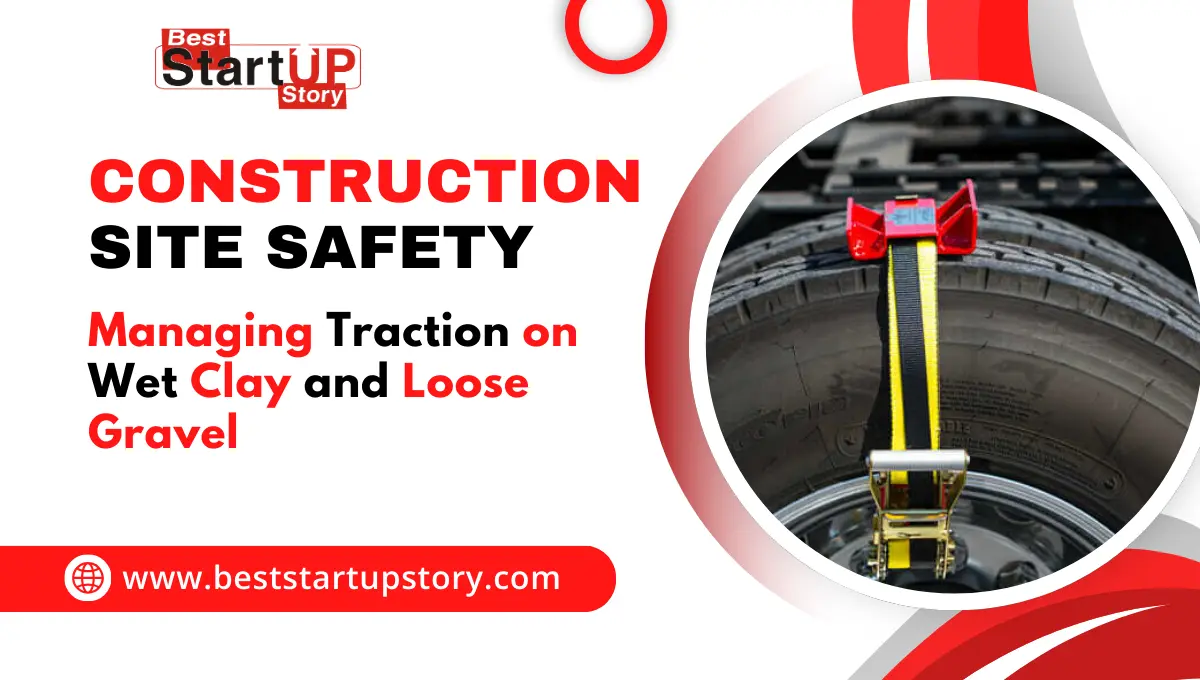
Even with good planning, trucks can still lose grip. That is why traction aids are essential. Recovery mats provide quick grip when tires spin in mud or gravel. Portable tools like TruckClaws work as reliable emergency traction devices for trucks, especially when surface prep is not enough.
They are reusable, easy to carry, and useful during sudden weather changes. Winches and clear recovery plans also help remove stuck vehicles fast and reduce site disruption.
What Safe Driving Practices Help on Wet Clay and Loose Gravel?
Driver behavior plays a major role in safety. Speed control is critical, especially when managing truck traction on loose gravel. Smooth steering, gentle braking, and steady throttle help maintain grip.
Drivers should keep controlled momentum but avoid sudden stops. If a skid starts, easing off pedals and steering calmly helps regain control. These off-road driving techniques support vehicle skidding prevention and protect both workers and equipment.
Why Are Inspections and Planning Important for Risk Reduction?
Daily checks make a big difference. Pre-shift safety inspections help spot tire, brake, and load issues early. A clear construction site risk assessment guides traffic flow and vehicle limits. With good planning, sites focus on preventing vehicle immobilization and lowering construction site downtime. Fewer breakdowns mean safer operations and steady progress.
Also Read: Preserving Architectural Integrity With Thoughtfully Designed Historical Windows