
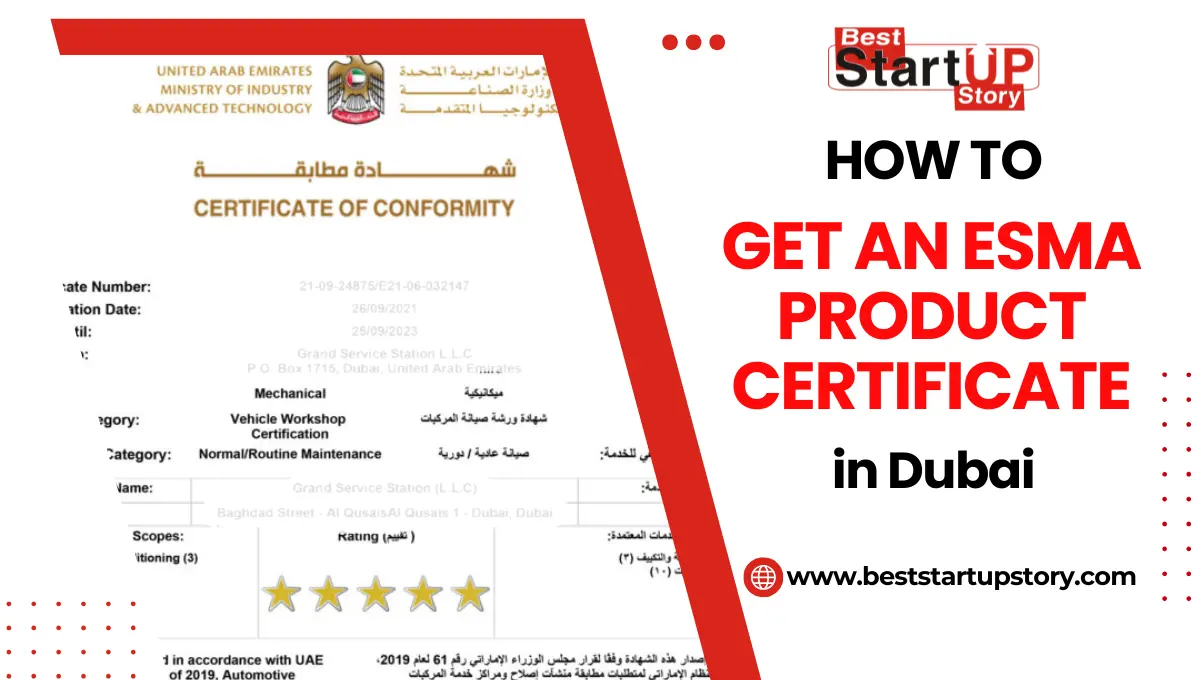
The United Arab Emirates (UAE) has positioned itself as a regional hub for trade, commerce, and manufacturing. With Dubai serving as a major gateway for imports and exports, the government has placed strong emphasis on product safety, quality, and compliance. To achieve these standards, the Emirates Authority for Standardization and Metrology (ESMA) introduced certification schemes that regulate products entering the UAE market.
One of the most essential requirements for businesses is obtaining the ESMA Product Certificate of Conformity. This certificate confirms that a product complies with the relevant UAE standards and technical regulations, ensuring safety, quality, and environmental protection. This article provides a comprehensive guide on how to get an ESMA product certificate in Dubai, along with the process, requirements, and benefits. Contact Far consulting Middle East for help.
What is an ESMA Product Certificate?
The ESMA Product Certificate of Conformity (CoC) is an official approval issued by the Emirates Authority for Standardization and Metrology. It certifies that a product meets UAE standards and complies with health, safety, and environmental requirements.
The certificate is mandatory for a wide range of regulated products, such as:
- Electrical appliances and electronics.
- Food and packaged goods.
- Cosmetics and personal care items.
- Building and construction materials.
- Tobacco products.
- Textiles and footwear.
Without an ESMA product certificate, companies cannot legally import, sell, or distribute such products in Dubai or anywhere in the UAE.
Why is ESMA Certification Important?
The UAE government enforces ESMA certification to:
- Protect consumers from unsafe or counterfeit products.
- Ensure quality in the domestic market.
- Facilitate trade by harmonizing with international standards.
- Boost confidence in locally available products.
- Prevent penalties and product recalls for non-compliance.
For businesses, having an ESMA certificate is not just a legal requirement but also a competitive advantage, as it demonstrates reliability and credibility in the marketplace.
Who Needs an ESMA Product Certificate?
The certificate is required by:
- Importers who bring goods into Dubai/UAE.
- Manufacturers who produce regulated items locally.
- Distributors and retailers who market regulated products.
In essence, any business involved in the supply chain of controlled products must ensure compliance with ESMA certification rules.
Step-by-Step Process to Get an ESMA Product Certificate in Dubai
Step 1: Identify Product Category
The first step is to confirm whether your product falls under the ESMA regulated category. Each category has its own set of technical requirements and applicable standards.
Step 2: Register with ESMA
Businesses must create an account on the ESMA online portal. Registration requires basic company details, trade license copy, and contact information.
Step 3: Submit Application
Once registered, the company submits an application for product certification. The application typically includes:
- Trade license copy.
- Product details and technical specifications.
- Test reports from accredited laboratories.
- Product labels, packaging, and manuals.
Step 4: Product Testing
Depending on the product type, ESMA may require testing to confirm compliance. Testing must be conducted in an ESMA-approved laboratory, either in the UAE or internationally recognized labs.
Step 5: Review and Evaluation
ESMA reviews the application, supporting documents, and test results. If necessary, the authority may request additional information or clarification.
Step 6: Payment of Fees
Applicants pay the prescribed fees for product certification. The amount varies based on the product category and certification type.
Step 7: Issuance of Certificate of Conformity (CoC)
Once all requirements are satisfied, ESMA issues the Product Certificate of Conformity. This certificate is usually valid for one year and must be renewed before expiry.
Types of ESMA Certification Schemes
ESMA offers different certification schemes depending on the product:
- ECAS (Emirates Conformity Assessment Scheme):
Applicable for various consumer products such as electrical items, cosmetics, and food. - EQM (Emirates Quality Mark):
A quality mark issued for products that comply with UAE standards and meet additional quality criteria. - Halal Certification:
Issued for food and cosmetic products to confirm compliance with Islamic standards.
Each scheme has its own specific requirements, but the overall process of evaluation and approval is similar.
Common Challenges in Getting ESMA Certification
Businesses often face difficulties due to:
- Lack of proper product documentation.
- Submitting test reports from non-accredited laboratories.
- Mislabeling or incorrect packaging details.
- Delayed responses to ESMA queries.
To avoid delays, it is advisable to work with experienced consultants or compliance specialists who can streamline the process.
Penalties for Non-Compliance
Selling or distributing products without ESMA certification can lead to:
- Financial fines.
- Confiscation of non-compliant products.
- Suspension of trade license.
- Reputational damage in the market.
Hence, obtaining the ESMA Product Certificate is not optional—it is mandatory for business continuity.
Benefits of ESMA Product Certification
- Market Access: Enables legal import and sale of regulated products in Dubai and across the UAE.
- Consumer Trust: Builds credibility among customers.
- Competitive Advantage: Certified products stand out against uncertified competitors.
- Risk Mitigation: Reduces the risk of penalties, recalls, or product bans.
- Global Recognition: Aligns with international standards, easing re-export opportunities.
Conclusion
Obtaining an ESMA Product Certificate in Dubai is a crucial step for any business dealing with regulated products. From electronics and food to cosmetics and construction materials, certification ensures that products meet UAE’s stringent quality and safety standards.
The process involves product registration, submission of documents, testing, and approval from ESMA. While it may seem complex, working with accredited laboratories and ensuring accurate documentation can significantly simplify the process.
For businesses, ESMA certification is more than a legal requirement—it is an investment in credibility, consumer safety, and long-term success in the UAE’s competitive market. By securing the certificate, companies can confidently expand their presence, build customer trust, and contribute to a safer marketplace in Dubai.
Also Read: Top 10 Most Expensive Horses In The World