
You know those mornings when you wake up and your head feels like it has been filled with wet socks? Or that weird flu-ish fog where even brushing your teeth feels like a triathlon. And then you remember the old days. The pre-telehealth days. Where you would drag yourself to a clinic, cough your lungs out in a waiting room full of equally miserable humans, just to get a piece of paper confirming the obvious. Absolutely cooked.
Now we have Telehealth Medical Certificates. Finally. A sensible idea in a world where people can grow meat in labs and buy cars that drive themselves. Took long enough.
Most Aussies used to think medical certificates were just for flu season or unlucky food poisoning moments. But here we are. Workers pushing through COVID, colds, migraines, anxiety spirals, and burnout days. Students need proof for exam extensions. Parents who can barely wrangle the school drop-off, let alone sit in a clinic. Suddenly, Telehealth Medical Certificates are not just convenient. They feel like common sense wrapped in compassion.
Alright, maybe not wrapped. More like gently placed.
Anyway. Let’s break it down.
What Exactly Are Telehealth Medical Certificates
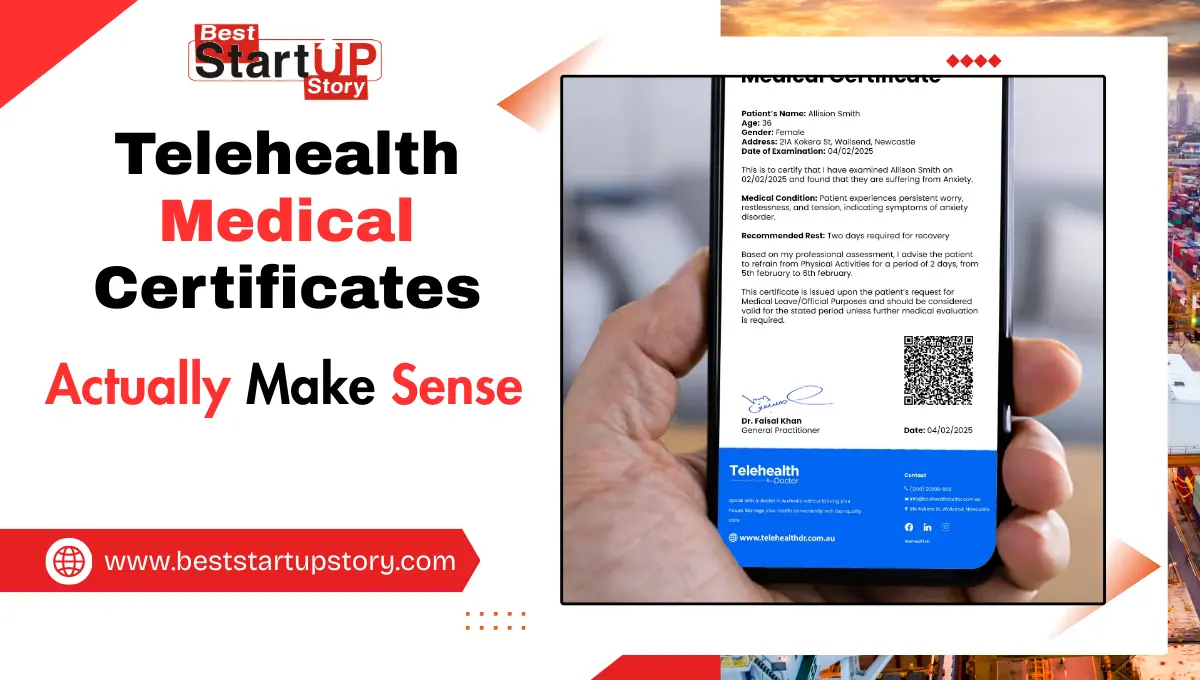
Nothing fancy. Telehealth Medical Certificates are official medical certificates provided by a healthcare professional during a telehealth appointment. You talk to a real doctor or nurse practitioner online. They assess your situation. Then you get your certificate digitally it works for short-term illness, minor injuries, mental health days, and care responsibilities. No line-ups. No fluorescent clinic lights. No awkward wave at the receptionist while clutching a tissue like your soul depends on it.
Telehealth Medical Certificates just fit modern life. They feel more… humane.
Why Australia Suddenly Embraced Them
Two words. Pandemic chaos. Before COVID, telehealth was a thing. Kinda. Primarily for regional areas. Then boom. We all became online appointment experts overnight. And the system realised something: people do not need to sit in a clinic for everything. Especially for a day off when they clearly need rest more than they need fluorescent lighting and waiting room chairs designed by someone who hates comfort.
Telehealth Medical Certificates picked up momentum. A lot of us thought it would fade once life went back to normal. Funny how this is the new normal. Remote work. Hybrid schedules. Sniffles and on-screen GP chats. Quiet wins.
But Wait. Are Telehealth Medical Certificates Actually Legal
Yep. There are rules. That is important. Employers sometimes worry that these things are some kind of magic sick note vending machine. But Telehealth Medical Certificates are issued by registered healthcare professionals. Covered by the same medical standards, privacy laws, and responsibility as in-person certificates.
If a doctor thinks you need rest, well… you probably do. If they feel you need in-person care instead, they will say that too. It is still healthcare. Just without the long drive and that one person coughing aggressively in the corner.
The Biggest Perk? Time. And Energy. And Sanity.
Think about it. Getting Telehealth Medical Certificates means:
- No waiting rooms
- No dragging sick kids into public places
- No travel across town half asleep
- Less exposure to other germs
- More rest where you need it. Home. Pyjamas optional
Productivity experts love to talk about efficiency hacks. Drink green juices. Wake up at 5 a.m. Cold plunge. But using Telehealth Medical Certificates instead of wasting half a day proving you need to lie down is a real-life hack.
Let’s Talk Fairness And Trust
Some folks worry Telehealth Medical Certificates might encourage people to fake sick days. But here is a thought. Most people do not want to work while ill. They also do not want to prove they are sick, like they are auditioning for a medical drama.
Trust works both ways. Healthy workers do better work. Sick workers spread germs. And burnt-out employees? They eventually quit. Telehealth Medical Certificates support balance. Kindness. Actual human wellbeing. More trust. Less bureaucracy.
And employers? They still get legitimate documentation. Everyone wins.
Mental Health Matters Too
Telehealth Medical Certificates are not only for fevers and coughs. Sometimes you need time off because your brain feels heavy. Your chest is tight. Or you just hit a wall. Hard.
Walking into a clinic in that state can feel impossible. Clicking a link? Easier. A small step is still a step. Telehealth Medical Certificates make mental health support feel accessible. And that is the kind of progress Australia needs to keep leaning into.
But Let’s Be Real. Telehealth Is Not Magic.
Sometimes you do need a physical check. Blood tests. X-rays. A stethoscope is involved somewhere. Telehealth Medical Certificates do not replace face-to-face medical care. They just fill the apparent gap. And they fill it well.
What The Future Might Look Like
Picture it. A world where being healthy is not more complex than being sick smooth systems. Secure digital certificates consistent standards. Telehealth Medical Certificates are sent alongside e-scripts, virtual mental health checks, and follow-ups.
Not a replacement for doctors. Just a smarter doorway to them.
Honestly, the future looks gentler.
Final Thought. Because There Always Is One
Telehealth Medical Certificates are not just a tech upgrade. They are a reflection of how we live now. Fast. Busy. Tired. But also more aware of health, family time, and mental well-being. And how precious energy can be.
So yes. Use Telehealth Medical Certificates from DocMate when you need them. Rest instead of commuting is miserable. Let yourself be human. That is the point.
Sometimes the most grown-up thing you can do is say, yeah… I need a day.
Also Read: How Franchise Reputation Management Keeps Locations Consistent